Hospitality, Bar
Café Luzia
One of Kreuzberg's most iconic bars, retuned so it finally sounds as good as it looks.
The brief
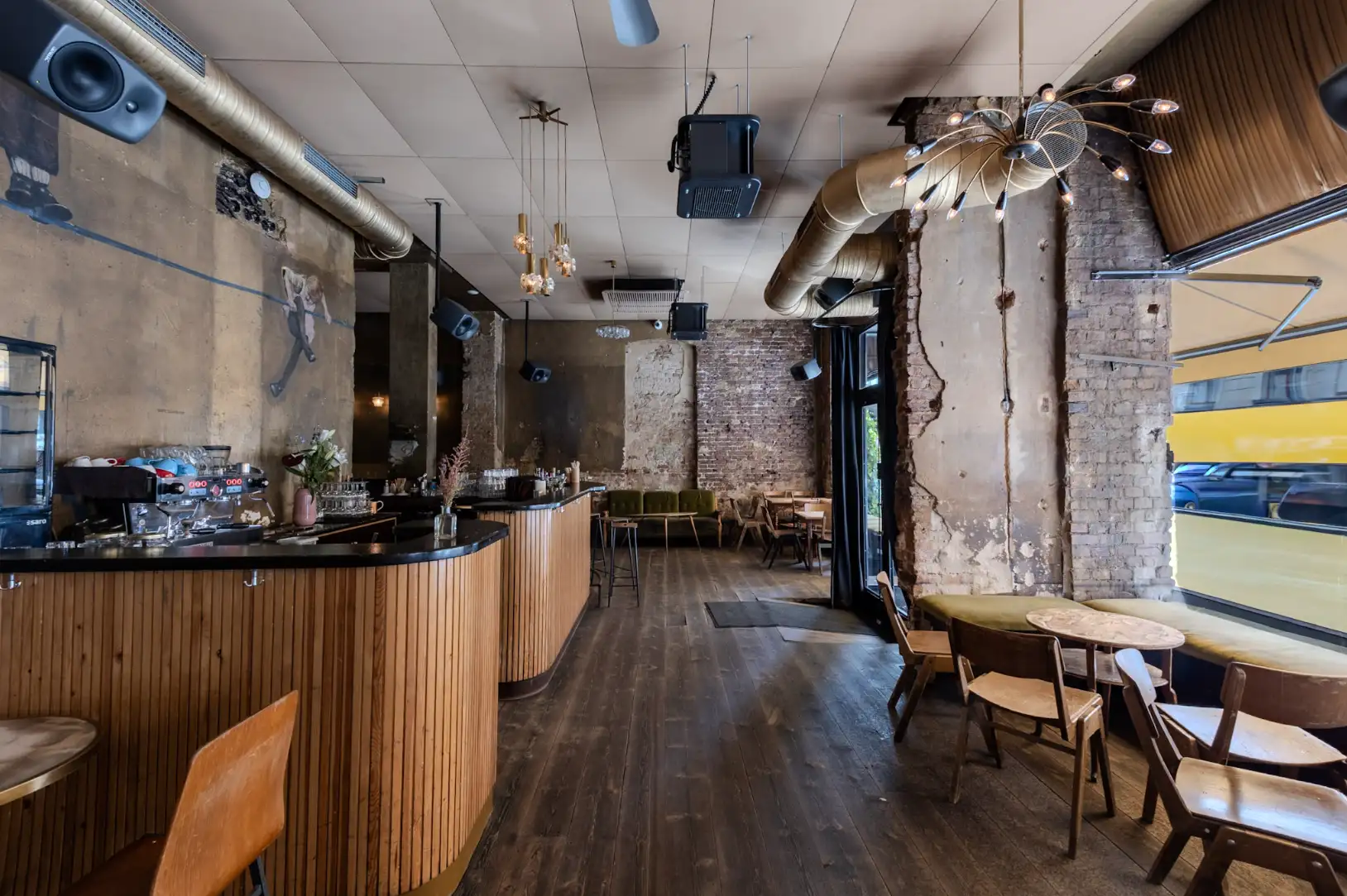
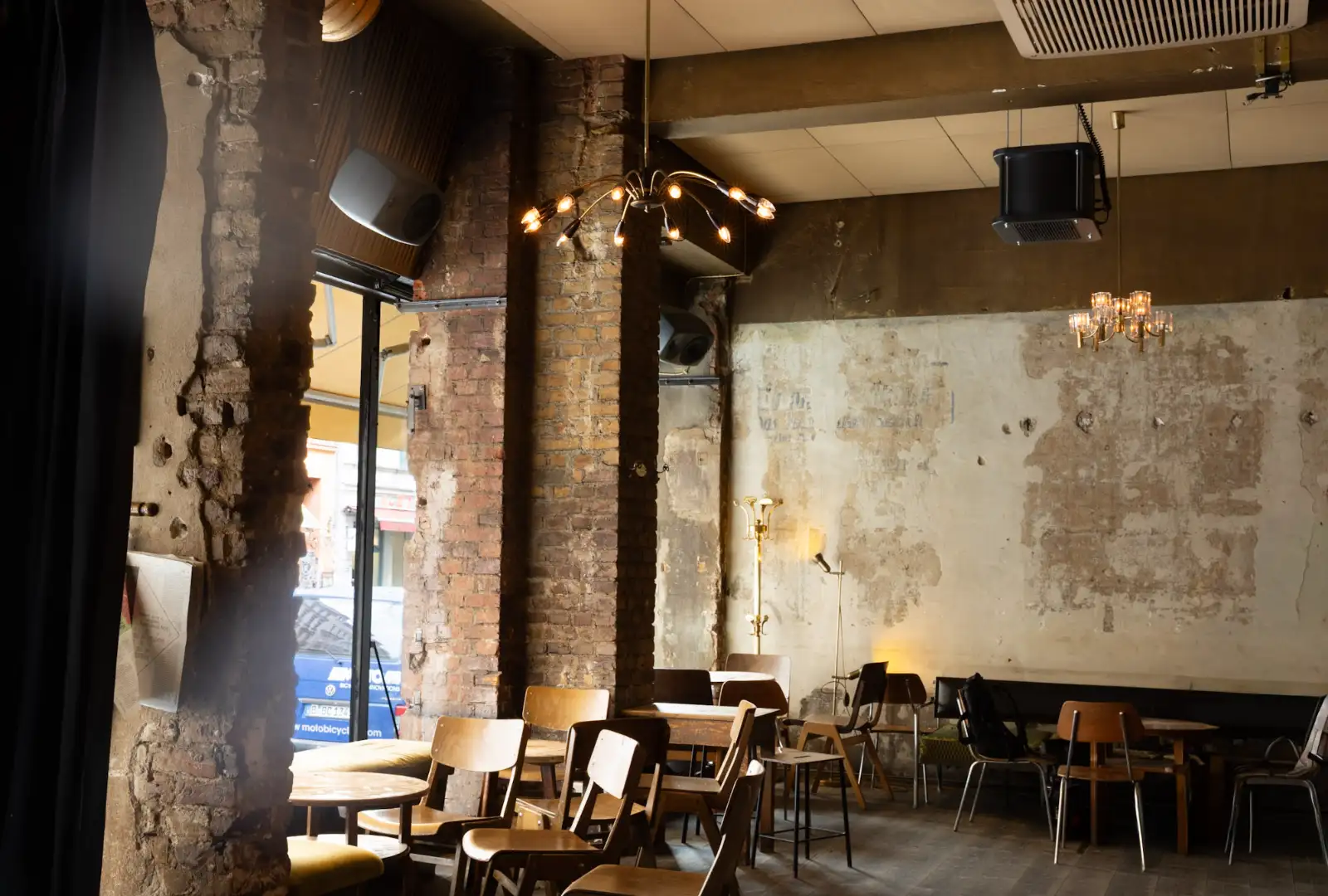
Café Luzia sits on Oranienstraße, in the heart of Kreuzberg. Candlelit tables, velvet cinema seats, exposed brick, high ceilings. On weekends, DJs push electronic music through the room. Visually, it has always worked. Acoustically, it had not.
The owners wanted Luzia to do more than a bar normally does. DJs, dancing, proper sound. The neighbours made it impossible. With support from Berlin's Clubcommission and the Senate's Schallschutzfonds, a renovation was approved. New ventilation meant the windows could finally stay closed in summer. But closing the windows only helps if the building envelope actually stops sound, and only if the room itself does not turn harsh once it is sealed.
One condition framed everything. The ceiling and walls carry golden murals by Berlin street artist Chin Chin of Redspective. None of it could be touched. The intervention had to disappear into the existing identity of the room.
The approach
This was two problems in one. Soundproofing deals with what leaks out. Acoustic treatment deals with what bounces around inside. They follow different physics. We had to solve both above the same ceiling, without touching the murals.
We built a complete subframe across the ceiling using a Würth aluminium rail system, partly wall-mounted and partly ceiling-mounted, engineered to shift load away from the old Altbau structure itself. A structural engineer signed off on the load distribution before any work started. The cavity between the existing Knauf Diamant double layer and the new rail grid was filled with double-layered micro polypropylene foam. That added mass-damping and broadband absorption, improved the transmission loss of the assembly, and killed the resonance of the void space, which left untreated would have acted like a drum.
The detail
Onto the substructure we deployed a new modular cover system, built around TPU 3D-printed connectors that slot into aluminium profile frames and click into a second layer of rails. Every panel can be removed individually for access, and every panel carries secondary safety fixings. Luzia was the first real-world deployment of this system.
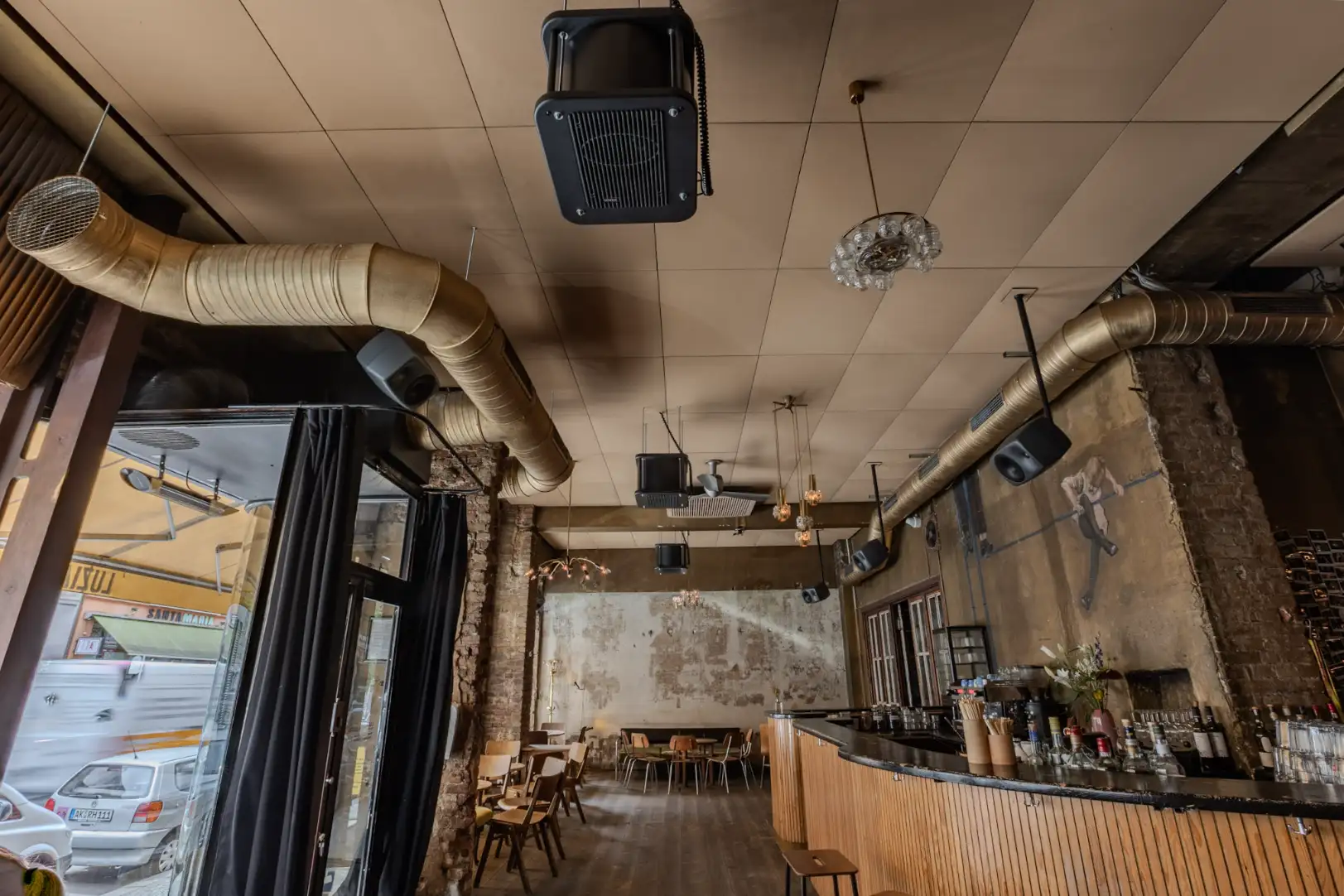
The fabric covers were hand-built from custom golden textile, commissioned and produced for us in Istanbul. Colour, weave, stretch and light behaviour were calibrated to read correctly under Luzia's warm candlelight. From below, the ceiling reads as one continuous golden surface, coherent with the murals and the baroque fragments of the room. It does not look like acoustic treatment. It looks like interior design.
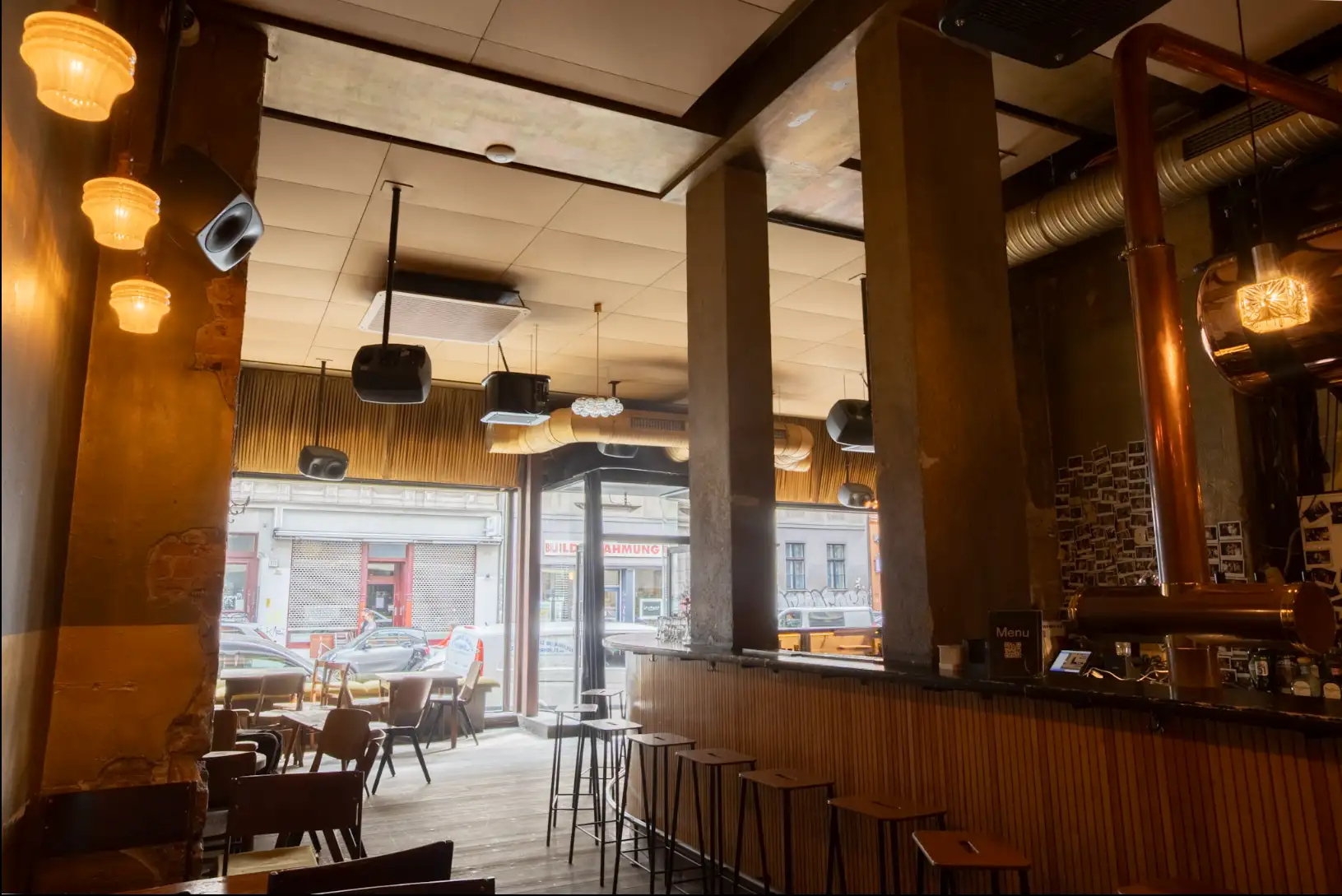
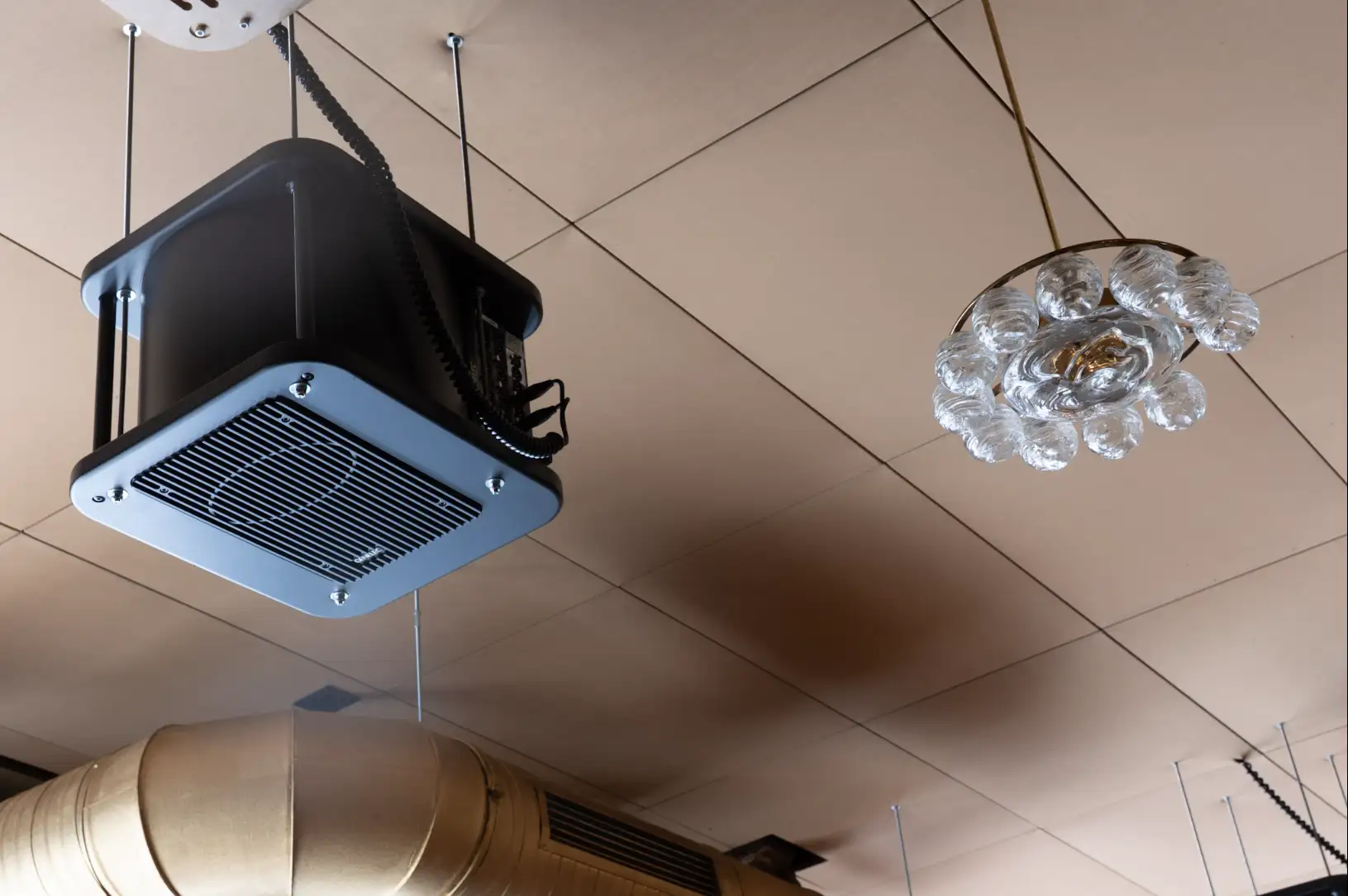
For the sound system we installed four Genelec subwoofers and twelve Genelec tops, ceiling-mounted on height-adjustable mounts with sylomer-based vibration isolators decoupled from the rail structure. Mechanical decoupling matters in a soundproofing context. The best insulation in the world is useless if your speakers are pumping energy into the building through rigid mounts. Twelve distributed tops keep throw distances short, which gives a uniform sound field across the room, clear and present at conversational levels and at proper party levels, without needing volume to compensate for dead spots.
The result
Luzia can now do what it always wanted to do. Windows closed, music on, DJs playing, the room dancing, the neighbours sleeping. The ventilation handles the thermal load. The ceiling assembly handles the sound transmission. The treatment handles the room response.
From the inside, it just feels right. Conversations are clearer during the day. Music has definition and warmth in the evening. The bass is present without being oppressive. The golden ceiling glows the way it always did. Behind the fabric, an engineered acoustic system is doing real work.
The hardest thing in acoustic design is rarely the physics. It is the constraint. A room too good to ruin. An identity that has to survive the intervention. That is the kind of problem we like.
Gallery